Service
Cosmetogynecology
Vaginal Laxity
1
Problems commonly associated with vaginal laxity
・ Reduced sensitivity and rate of orgasm during sexual intercourse
・ Vaginal flatus during sexual intercourse
・ Increased susceptibility of the vaginal environment to external factors, leading to pH imbalance and a higher risk of vaginal infections
・ In cases of prolapse, increased likelihood of urinary leakage, difficulty urinating, and difficulty with bowel movements
2
Issues related to vaginal laxity
Congenital differences in vaginal elasticity
Everyone has different tissue elasticity. Some people may naturally have lower vaginal elasticity.

Childbirth
During childbirth, the vagina is stretched by the baby's body, which can lead to postpartum vaginal laxity. Even with a cesarean section, increased intra-abdominal pressure during pregnancy may still contribute to vaginal laxity afterwards.

Aging
As women age, estrogen and collagen levels gradually decline, causing the vagina to lose elasticity.

Chronic coughing or constipation
Coughing and straining during bowel movements engage abdominal muscles and increase pelvic pressure. Over time, this repeated pressure on the vaginal walls can lead to vaginal laxity.
3
Ways to Improve Vaginal Laxity
Vaginal radiofrequency therapy
Non-invasive medical treatment to help improve vaginal laxity
⭢ Vaginal RF

Kegel Exercises
・ The goal is to strengthen the pelvic floor muscles
・ When the pelvic floor muscles contract, they lift the entire pelvic floor upward (toward the head), then relax
・ Actions include “anal tightening,“perineal contraction,” and “holding urine”
・ Avoid holding your breath, squeezing the inner thighs, over-tightening the buttocks, or excessively pulling in the abdomen
・ Kegel exercises are different from bridge exercises
Kegel Sports
Bridge Sports
Involving muscle groups
Pelvic floor muscle
Hip muscle group
Back Leg Muscles
Posterior calf muscle
Objectives of the exercise
INTRA-ABDOMINAL PRESSURE BUILDS
Urinary Control
Prevent Debris
Paired with core movement
Hip muscle activation
Waist, pelvis, hip stability training combined with core exercises
Word of mouth
Anal contraction, urination, vaginal narrowing
FEET STEP ON THE FLOOR, BUTTOCKS LIFT
Motion Appearance
No movement visible on the surface
方潔醫師 Dr. Jessica 私密美型婦科診療
4
Vaginoplasty
Who is suitable for Vaginoplasty?
・ Individuals who subjectively feel reduced tightness or decreased sensation during sexual intercourse after childbirth
・ Those who have not seen improvement after Kegel exercises, vaginal laser, or radiofrequency treatments
・ Individuals who have given birth or experienced trauma to the vaginal area, where prolonged pressure on the vaginal walls may lead to laxity
5
Vaginoplasty treatment
Types of Vaginoplasty
Introduction to the labia minora
陰部異狀

Full-layer vaginal wall repair.
Repairs the vaginal wall from deep to superficial layers by tightening and suturing the loosened underlying fascia.
Advantages : It can repair deeper layers and achieve overall vaginal tightening.
Disadvantages : Requires general anesthesia has a longer recovery period and carries a higher risk of over-tightening and pain during sexual intercourse.

Vagilangelo Minimally Invasive Vaginoplasty
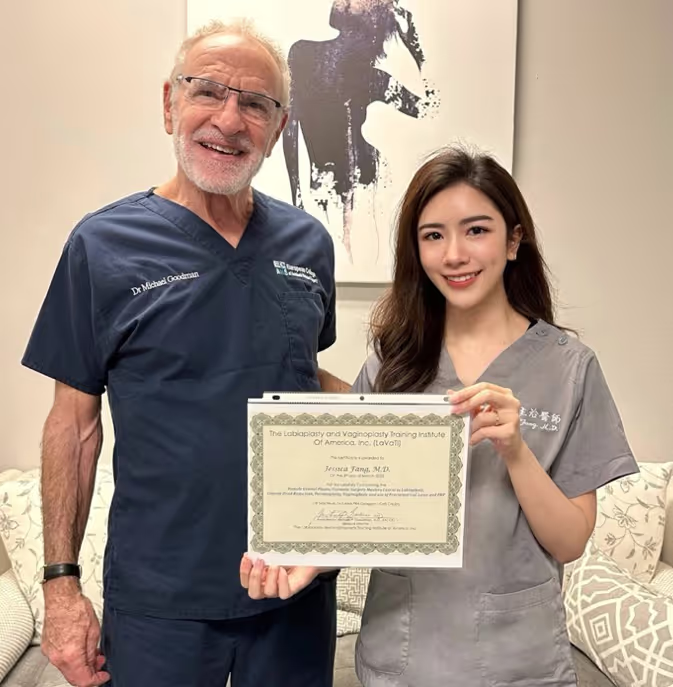
A minimally invasive vaginal rejuvenation technique developed by Dr. Marashi in the United States, based on the biomechanics of sexual intercourse. By adjusting the vaginal angle and combining it with PRP injections, it aims to enhance sensitivity during intercourse and increase the likelihood of orgasm. Dr. Jessica had the opportunity to meet Dr. Marashi at an international conference in 2024 and became the first certified Vagilangelo physician in Taiwan.

Advantages : Can be performed under local anesthesia, with minimal wounds and faster recovery. Enhances sensitivity of the clitoris and G-spot.
Disadvantages : Cannot achieve deep vaginal tightening.

Introduction to the labia minoraIntroduction to the labia minora
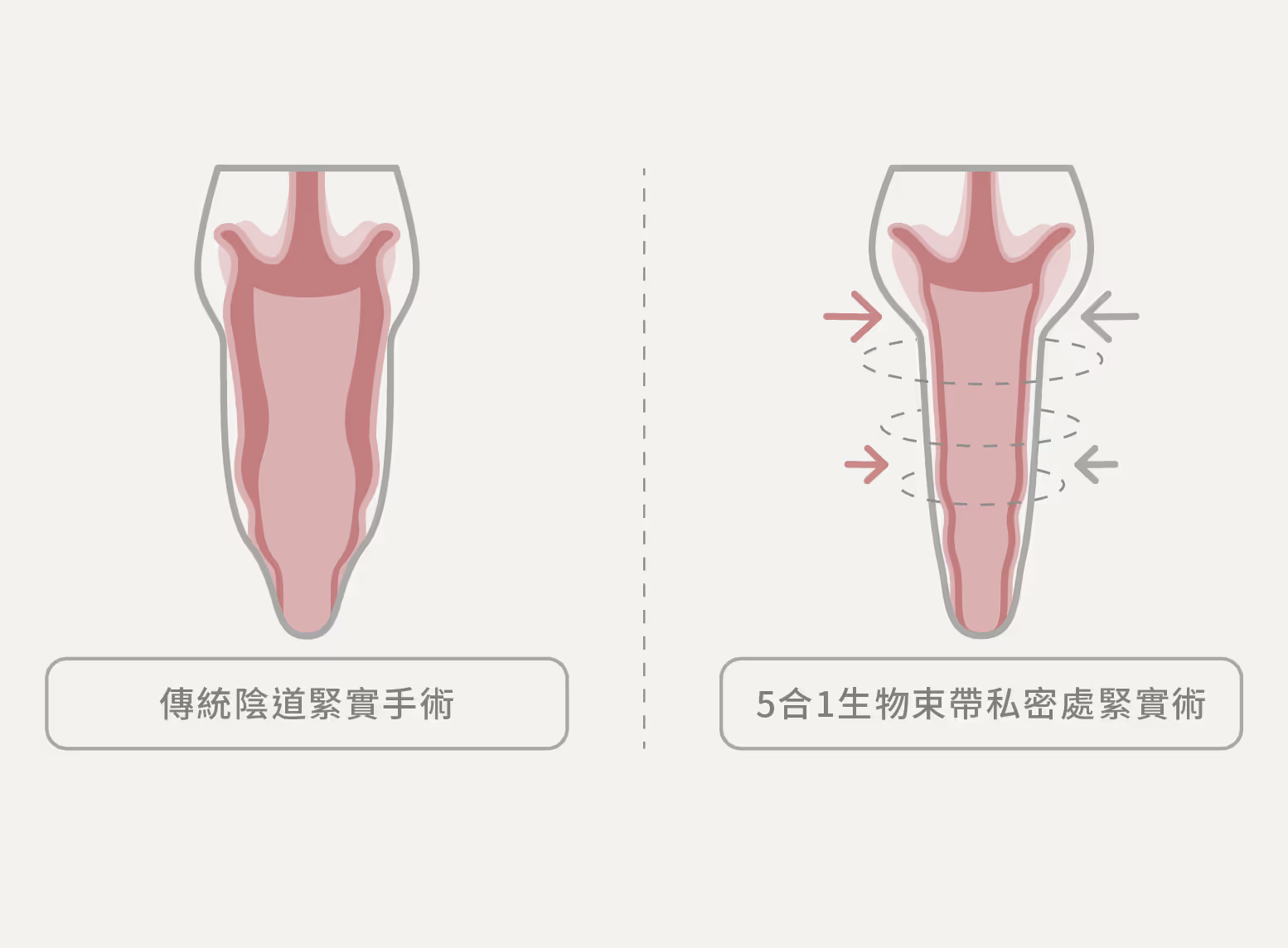
Traditional Vaginal Orthoplasty
Vagilangelo
Minimal Vaginal Orthoplasty
Surgical method
Repairs vaginal walls from deep to shallow layers, tightens the sagging subcutaneous vaginal membrane
Surgical Vaginal Angle Adjustment with PRP Injection
pros
✔ Repair Deep Vagina
✔ Full Vaginal Tightening Effect
✔ Local Anesthesia
✔ Small wound
✔ Fast recovery
✔ Increased sensitivity
shortcomings
✘ Full body anesthesia is required
✘ Longer repair time
✘ Problems with tightness and sexual intercourse pain are easier
✘ Can't make deep vagina tight
6
Pre- and Post-Operative Care Instructions
・ Avoid smoking for 3 weeks before and 3 weeks after the procedure. Do not take anticoagulants or aspirin for 14 days before and 7 days after surgery.
・ Schedule the surgery outside of your menstrual period; ideally, it should be performed shortly after your period ends.
・ Get adequate rest for 5–7 days after surgery. It is recommended to stay in a semi-reclined or lying position with the pelvis elevated.
・ Avoid lifting heavy objects (over 4–5 kg), do strenuous exercise, fast walking, and climbing stairs for 2 weeks after surgery.
・ Avoid running, cycling, dancing, and swimming for 1 month after surgery.
・ Avoid any form of vaginal intercourse for 2 months after surgery.