service
Gynecology examinations
Pap smear
1
Who needs a PAP smear?
Any woman who has had sexual experience may become infected with HPV and subsequently develop cervical cancer. According to the American College of Obstetricians and Gynecologists, women aged 21 and above should undergo a Pap smear at least once every three years, regardless of sexual intercourse. However, in Taiwan, it is generally recommended that the women aged 30 and above who are sexually intercourse have a Pap smear at least once every three years.
2
Why is Pap smear important?
A Pap smear can detect precancerous changes of the cervix at an early stage, allowing for early treatment and preventing progression to cervical cancer. International studies have shown that large-scale Pap smear screening can reduce the incidence and mortality of cervical cancer by 60–90%.
Cervical cancer is a common cancer among women. In Taiwan, approximately 1,500 women are diagnosed with cervical cancer each year, and nearly 640 deaths are caused by it.
Introduction to the labia minoraIntroduction to the labia minora
陰部異狀陰部異狀
3
Pap Smear Results and Follow-up Management
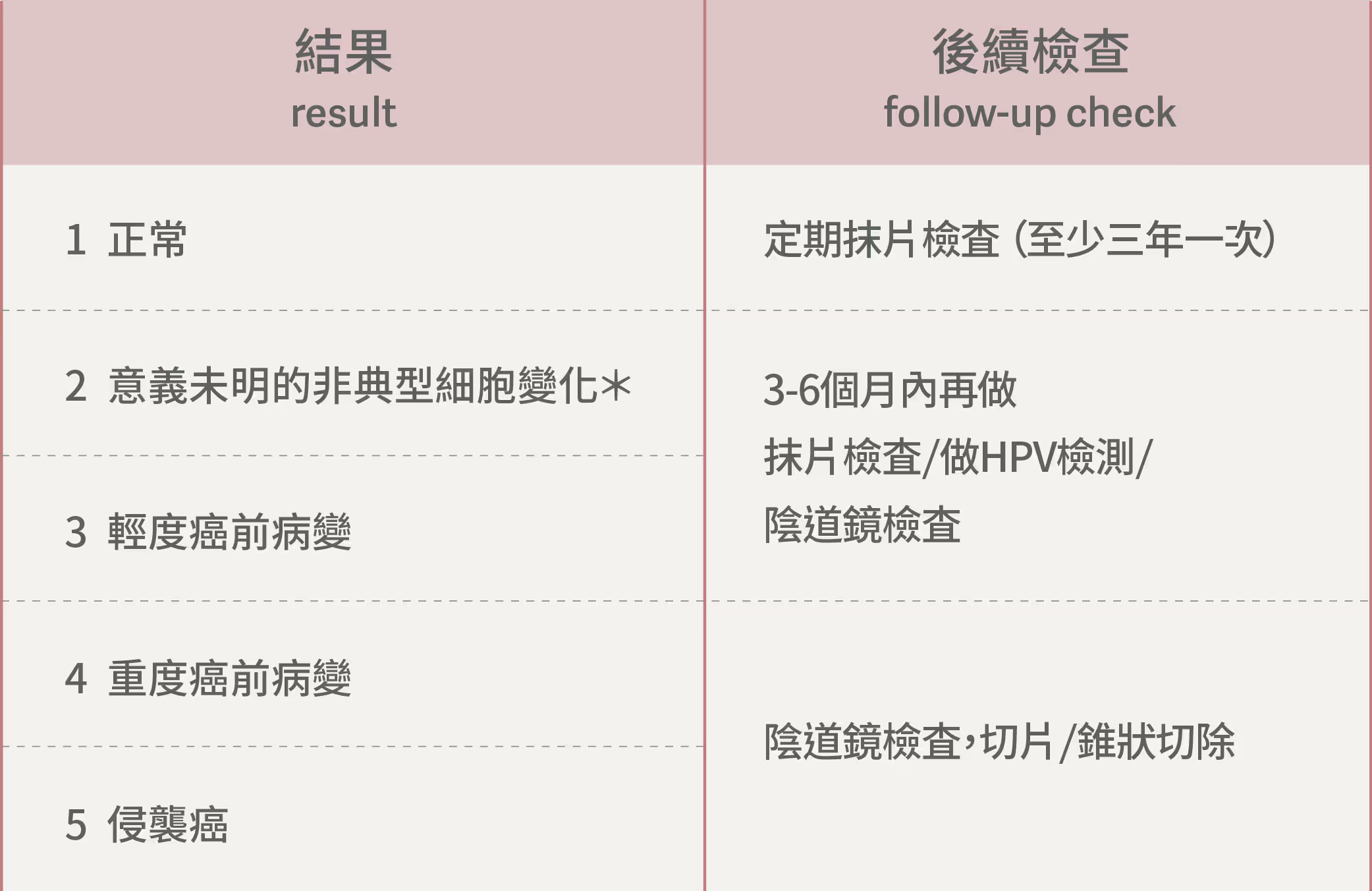
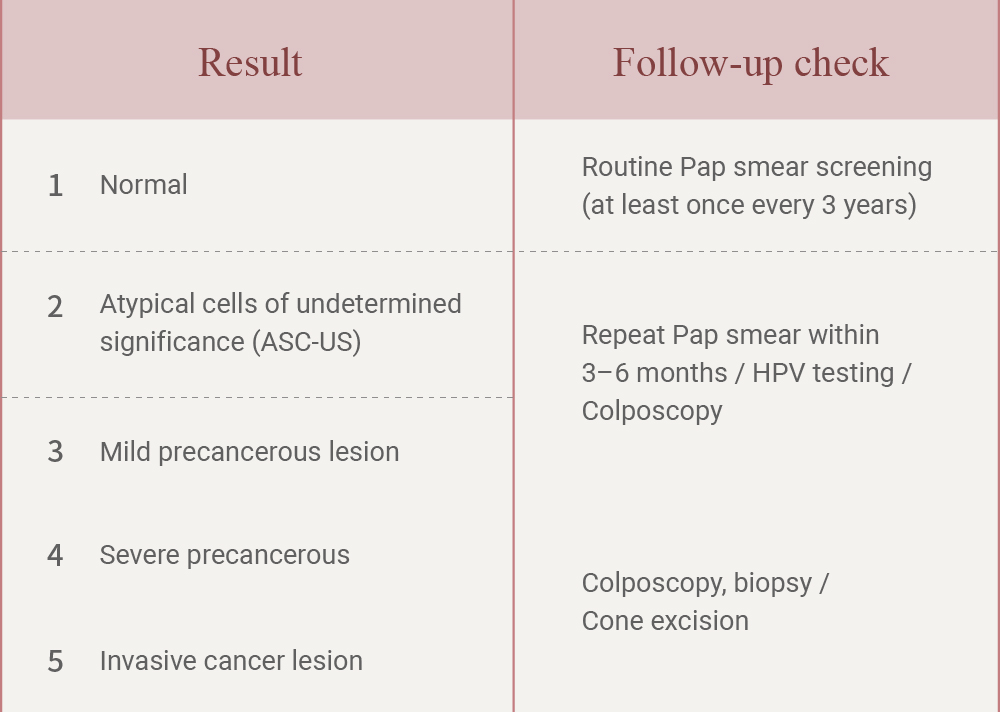
An abnormal Pap smear does not mean that you have cancer. You should consult a doctor for further examination, such as a colposcopy and biopsy, to confirm the diagnosis.

At the same time, any screening test may produce false-negative results. Even if the test result is normal, you should seek medical attention as soon as possible if you notice any unusual symptoms.

Introduction to the labia minora
陰部異狀
4
HPV test
What is HPV testing?
Human papillomavirus (HPV) is primarily transmitted through contact with skin, mucosa, or bodily fluids during sexual intercourse. Persistent infection with high-risk HPV types may lead to precancerous cervical lesions and cervical cancer.
The HPV test detects the presence of HPV by identifying the virus of deoxyribonucleic acid (DNA).

What information can an HPV test provide?
・ There are more than 200 types of HPV, some of which are high-risk types associated with precancerous cervical lesions, cervical cancer, and external genital cancers in both men and women.
・ The HPV test can determine whether a person is infected with a high-risk type of HPV.

Who needs to get tested for HPV?
・ Individuals aged 30 and above who have had sexual experience may undergo both a Pap smear and HPV screening.
・ If the swab test results in abnormalities of “Abnormal but Significant Scaly Epidermal Cells” (ASCUS), further virus testing may be performed.

5
FAQs
Do women who are no longer sexually active or who are postmenopausal still need Pap smears?
Because cancer develops gradually over time, and infection with human papillomavirus (HPV) may take 10–20 years or longer to progress to cervical cancer, women who are no longer sexually active or who are postmenopausal should still undergo regular Pap smear screening

Do women without sexual experience need a Pap smear?
According to the American College of Obstetricians and Gynecologists (ACOG), women aged 21 and above should have a Pap smear at least every three years, regardless of sexual history.

However, in Taiwan, it is generally recommended that women aged 30 and above who are sexually active undergo a Pap smear at least once every three years.For women with no sexual experience, the risk of cervical cancer is very low, so screening may be optional. However, if there is a family history of precancerous cervical lesions or cervical cancer, or if the individual smokes, it is recommended to consult a physician about whether screening is necessary.

Do you still need a Pap smear after hysterectomy?
If the uterus was removed due to cervical cancer or precancerous lesions, there remains a higher risk of vaginal cancer, so regular Pap smears are still recommended.

If the hysterectomy was performed for benign conditions, you should consult a gynecologist to determine whether continued Pap smear screening is necessary.